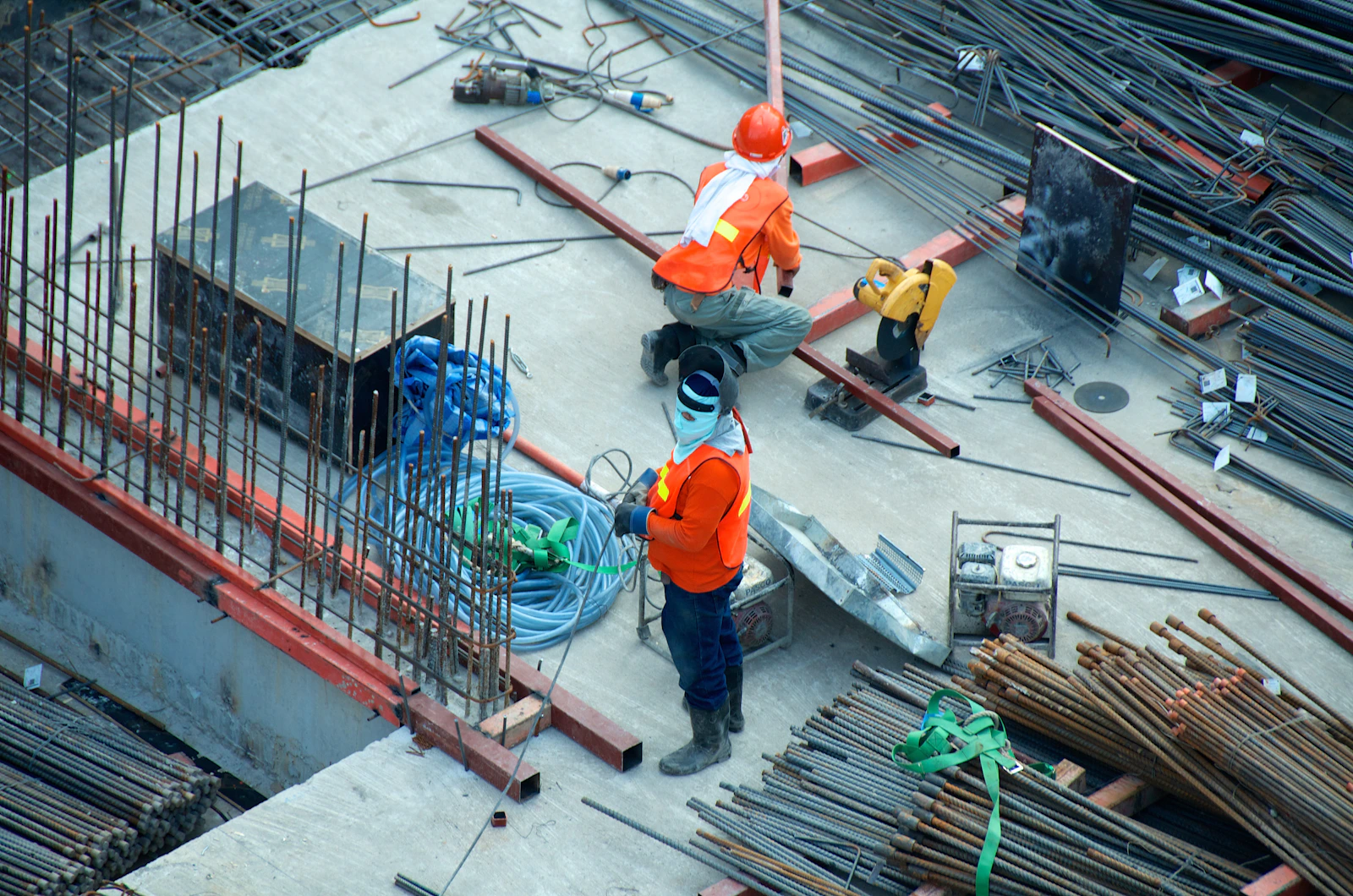
Construction volunteers and local workers laying foundation blocks together on a new community building in Nepal
💼 Volunteering

Construction & housing volunteering abroad

Building houses, schools, and community infrastructure in underserved communities is among the most tangible forms of volunteering available — the results are visible, permanent, and used daily by real people. But construction volunteering also has one of the most documented ethical problems in the volunteer sector: unskilled volunteers producing substandard work, displacing skilled local construction workers who need the income, and the 'revolving door' problem where buildings are never finished because each team starts from scratch. The difference between a programme that helps and one that harms is in the design. This guide explains what good design looks like.

How it worksCompare providers
50+ yearsHabitat for Humanity — the gold standard since 1976
70+ countriesHabitat for Humanity Global Village operates worldwide
All Hands and Heartsleading disaster relief construction operator
Skilled tradesyour most valuable contribution — licensed professionals needed
The opportunity

What makes construction volunteering work — and what makes it fail

The ethical critique of construction volunteering is specific and well-documented. The core problem: when unskilled international volunteers perform construction tasks, three things often happen simultaneously. First, the work quality is lower than what a skilled local construction worker would produce — which creates structural risk in the buildings people will live in. Second, the local skilled tradespeople who would otherwise be employed on these projects are displaced, losing income they depend on. Third, because each volunteer group starts without continuity from the previous group, projects drag on over years or are never completed. Jonathan Katz's writing on Haiti reconstruction and the academic literature on 'voluntourism' in construction contexts is extensive and credible.

The programmes that avoid these failures have a consistent set of design features. They employ local construction professionals as the skilled workforce and site supervisors on every project. International volunteers supplement rather than replace local labour — they do the unskilled physical work (mixing concrete, carrying materials, site clearance) under local supervision, while the skilled work (foundations, structural elements, electrical, plumbing) is done by paid local tradespeople. Projects run continuously with local professional management rather than stopping and starting with volunteer group arrivals. And the community whose housing is being built participates in the design and project decision-making. Habitat for Humanity's Global Village programme was built around precisely these principles and has refined them over 50 years.

Disaster relief construction is a distinct sub-category that operates under different rules. When a community has lost housing to a cyclone, earthquake, or flood, the urgency and scale create a legitimate demand for international volunteer labour at a volume that exceeds local capacity. All Hands and Hearts — the primary disaster relief construction operator — specifically calibrates when international volunteers add value and when they should not deploy. Their deployment decision process is documented and peer-reviewed. Emergency construction volunteering is a different context from development construction and is not subject to the same labour displacement critique.

Crew roles

What roles are available

🧱

General Labour (Unskilled)

Entry level

The most accessible construction volunteer role: unskilled physical work under the supervision of local construction professionals. Carrying and mixing materials, site preparation, block laying under supervision, painting, and site clearance. Every construction volunteering programme accepts general labour volunteers. The contribution is real — labour hours that free up skilled workers to focus on technical tasks. Physical fitness is the primary requirement.

Physical fitness requiredNo formal qualifications2-week minimum

Programme fee: €800–€1,600 / 2 weeks

🔨

Skilled Trades Volunteer

Mid level

Licensed electricians, plumbers, carpenters, masons, and tilers working at trade level under local site management. Skilled trades volunteers multiply project impact far beyond what a general labourer contributes — skilled work that would otherwise require expensive external contractors is completed by the volunteer team. All Hands and Hearts specifically prioritises skilled trades in all disaster relief deployments. Some programmes offer reduced programme fees to skilled trades volunteers in recognition of the higher impact contribution.

Licensed tradespeople preferredElectrician / plumber / carpenter1-week minimum

Programme fee: €600–€1,400 / 2 weeks (some reduced fees for skilled volunteers)

📐

Professional Volunteer

Senior level

Architects, structural engineers, project managers, and civil engineers contributing at the design, planning, and management level. Build Change specifically engages professional volunteers for earthquake-resilient design development and technical training of local construction industries. Professional volunteers in Habitat for Humanity programmes work at the project management level, coordinating material procurement, schedule management, and quality assurance alongside local professional staff.

Architecture or engineering degreeStructural design experienceProject management qualification useful

Programme fee: €0–€1,500 / project (some funded for professionals)

🚨

Disaster Relief Rapid Response

Mid level

Deployment to active disaster zones through All Hands and Hearts or equivalent organisations following a major event. Available at short notice, typically committing to 2–4 weeks. Site conditions are more variable and demanding than development construction — debris clearance, temporary shelter construction, and assessment work alongside early-stage rebuilding. All Hands and Hearts maintains a standing deployment list for verified volunteers; register in advance at allhandsandhearts.org.

Physical fitness essentialAny construction experience beneficialFlexible availability required

Programme fee: Minimal or waived in active disaster relief contexts

Step by step

How to find an ethical construction volunteering programme

  1. 1

    Identify your skill level honestly and choose the appropriate role

    Construction volunteering divides cleanly by skill level. General labour — unskilled physical work under supervision — is appropriate for any volunteer who is physically fit and willing to take direction. Skilled trades — licensed electricians, plumbers, carpenters, masons — contribute at a level that multiplies programme impact. Professional volunteers — architects, structural engineers, project managers — contribute at the programme design and management level. Habitat for Humanity's Global Village accepts all three categories. Misrepresenting your skill level on a construction programme creates safety risks for the building's future occupants.

  2. 2

    Verify that local workers are the primary skilled workforce

    Ask any construction volunteering operator: 'Are local construction professionals employed on this project as the skilled workforce?' The answer should be unambiguous yes. In Habitat for Humanity Global Village projects, local staff and partner families contribute 'sweat equity' (labour hours on their own homes and others' homes) and local construction professionals supervise all structural work. If the answer is unclear or evasive, the programme may be structurally displacing local workers.

  3. 3

    Check for project continuity — not restart

    Ask: 'Is this project managed continuously by a local team between volunteer group visits, or does each group begin fresh?' Ethical construction programmes maintain continuity — a local project manager ensures progress between volunteer group arrivals so that the project moves forward steadily regardless of volunteer scheduling. Programmes where each group 'starts' a project and does not know or care whether it was ever completed are structurally unable to deliver finished buildings.

  4. 4

    Research Habitat for Humanity Global Village if you are a first-time volunteer

    Habitat for Humanity Global Village is the entry point for construction volunteering for strong reasons: 50 years of programme refinement, the largest independent operational track record in the sector, and transparent community selection processes. Their 1–2 week Global Village trips are structured for mixed-skill groups including complete novices. If you are unsure where to start, start here. More specialised operators (All Hands and Hearts for disaster relief, Build Change for engineering-level work) are the logical next step for volunteers with professional credentials.

  5. 5

    Prepare physically for sustained manual labour in heat

    Construction volunteering is physically demanding. Days typically run 7am–4pm doing manual labour — carrying materials, mixing concrete by hand, laying blocks — in equatorial or subtropical heat. Volunteers who are not regularly physically active before arrival find the first two to three days significantly more challenging than expected. Building a baseline of physical fitness before departure — specifically upper body and core strength — makes a measurable difference to both productivity and enjoyment.

Compare your options

Providers — certifications, courses & job boards

The construction volunteering market is anchored by Habitat for Humanity, which has operated at a scale and quality level that makes it the first reference point for any prospective volunteer. All Hands and Hearts leads the disaster relief sub-category. The operators below cover the full spectrum from structured placements to disaster response.

The gold standard operators

These two organisations represent the highest ethical and operational standards in construction volunteering. Both have transparent programme designs, rigorous community partnership models, and multi-decade track records.

Habitat for Humanity — Global Village

The world's leading housing construction volunteering programme, operating since 1976 in 70+ countries. Global Village trips run 1–2 weeks, accept all skill levels, and are explicitly designed around community partnership — families contribute sweat equity alongside volunteers, local construction professionals supervise all structural work, and community selection processes ensure homes reach those most in need. Annual build statistics are published. Their programme design is the benchmark against which all other construction volunteering should be measured. Corporate team builds are also available.

Use this when: For any first-time or general construction volunteer. The gold standard and the natural starting point for anyone new to this type of volunteering.

70+ CountriesSince 1976Community Partnership ModelAll Skill LevelsCorporate Groups
Visit ↗

All Hands and Hearts

The world's leading disaster relief construction volunteering organisation. Deploys specifically after disasters when international volunteer labour is genuinely needed at scale — cyclones, earthquakes, flooding. Operates a transparent deployment decision process: they assess whether international volunteers add value before accepting them (not all disasters require international volunteers). Skilled trades volunteers are prioritised. Published annual impact reports. Google.org-funded and independently audited.

Use this when: For disaster relief construction volunteering. Also first point of contact if you have licensed construction trades skills and want maximum impact contribution.

Disaster ReliefTransparent DeploymentSkilled Trades PriorityGoogle.org FundedIndependently Audited
Visit ↗

Build Change

Engineering and technical assistance organisation focused on disaster-resilient construction in emerging economies. Less a volunteer-placement operation and more a professional development partnership — engineers, architects, and building professionals work alongside local construction industries to develop earthquake and typhoon-resistant building practices. For professionally qualified construction volunteers, Build Change offers the most technically rigorous engagement available in the sector.

Use this when: If you are a licensed engineer, architect, or structural professional who wants maximum technical impact in construction volunteering.

Engineers & ArchitectsDisaster-Resilient DesignProfessional LevelTraining-Focused
Visit ↗

Structured placement operators

These operators run construction and community infrastructure volunteering programmes across multiple destinations with structured logistics and volunteer support.

Projects Abroad — Construction

International volunteer organisation with structured construction programmes in Nepal, Ghana, and Cambodia. Comhlámh Code of Good Practice accredited. Orientation and safety training provided. Projects are locally designed and managed with volunteers supplementing local labour. Good for volunteers who want a broader programme infrastructure (accommodation, in-country support, activity management) alongside construction work.

Use this when: You want a fully supported placement with strong in-country infrastructure and Comhlámh ethical accreditation.

Nepal · Ghana · CambodiaComhlámh AccreditedOrientation TrainingStructured Support
Visit ↗

IVHQ — Construction Volunteering

Budget construction volunteering programmes in Nepal, Cambodia, and Guatemala. Transparent pricing and a strong review record. Suitable for physically fit volunteers of any skill level who want the most affordable route to structured construction volunteering with proper in-country coordination.

Use this when: You want the most affordable structured construction placement with a verified track record in Nepal, Cambodia, or Guatemala.

Nepal · Cambodia · GuatemalaBudget TierTransparent PricingAll Skill Levels
Visit ↗

Construction volunteering programme quality varies significantly across operators. The ethical frameworks referenced above reflect international development sector consensus as of 2026. Always verify a programme's local employment practices and community ownership model before committing. Building work carries inherent physical risk — ensure you follow all site safety instructions from local supervisory staff.

Pay guide

What does it cost to volunteer?

Construction volunteering programme fees cover accommodation, meals, materials, tools, and project coordination. Some operators offer reduced fees for skilled trades volunteers. Disaster relief deployments through All Hands and Hearts typically have minimal or no programme fees in active relief phases.

Register in advance — deployment is event-driven
🚨

Disaster relief

€0–€300

in active disaster relief deployments

  • All Hands and Hearts deployments
  • Basic camp accommodation
  • Meals at base camp
  • Tools and materials provided
Most affordable structured option
🧱

Budget placement (2 weeks)

€800–€1,300

all-in (accommodation, meals, tools)

  • Shared accommodation
  • Meals at project site
  • Safety training and equipment
  • IVHQ and Habitat for Humanity entry tier
Most popular
🏠

Mid-range (2 weeks)

€1,300–€2,000

all-in

  • Comfortable shared accommodation
  • All meals
  • Airport transfers
  • Projects Abroad / structured operator tier
👥

Corporate group or extended

Custom

per person for group bookings

  • Habitat for Humanity group pricing
  • Team building framework
  • CSR documentation provided
  • Multiple destination options
Where to go

Where to volunteer in construction and housing projects

Each destination represents a different type of construction need — post-earthquake reconstruction, development housing, community infrastructure, and disaster relief. The right destination depends on your skills, schedule, and the type of contribution you want to make.

Construction volunteer and Nepali community members laying bricks for an earthquake-resilient school building near KathmanduBest: October – April (dry season; avoid June–September monsoon)

Nepal

Nepal's 2015 Gorkha earthquake killed nearly 9,000 people and destroyed over 600,000 homes. A decade on, reconstruction is still incomplete in rural mountain districts — not because of insufficient resources alone, but because of the logistics of building at altitude with limited infrastructure. Construction volunteers in Nepal work primarily on school and community centre rebuilding in the Sindhupalchok and Kavre districts northeast of Kathmandu, where Habitat for Humanity and several other credible operators have continuous programmes. The construction challenge here is specific: earthquake-resistant masonry requires precise technique, and the training component of any credible Nepal construction programme is accordingly rigorous. The cultural and physical environment — Himalayan foothills, Nepali warmth, extraordinary landscapes during non-working hours — makes Nepal one of the most personally rewarding construction volunteer destinations.

Volunteer construction team framing wooden walls of a new community house with local workers in rural Siem Reap, CambodiaBest: November – April (dry season; monsoon May–October limits outdoor construction)

Cambodia

Cambodia's housing and community infrastructure deficit is primarily a development rather than post-disaster need — rural Cambodian communities face persistent housing insecurity rooted in decades of economic and political disruption, not a single catastrophic event. Habitat for Humanity Cambodia has operated continuously here since 1994 and their programme is one of the most established in Southeast Asia. Construction in Cambodia uses primarily timber and concrete block construction suited to tropical weather patterns and local materials. The Siem Reap region (near Angkor Wat) and rural provinces have the highest concentration of active programmes. Non-working hours in Siem Reap — the cultural proximity to Angkor, the night market, the accessibility of the surrounding countryside — make Cambodia one of the most enjoyable contexts for a construction volunteering placement.

Community housing volunteer laying adobe block walls with a local family in the Guatemalan highlandsBest: November – April (highland dry season)

Guatemala

Guatemala combines a significant housing deficit in its indigenous Maya highland communities with one of Latin America's most distinctive cultural environments. The construction challenge here includes adobe and concrete block construction in altitude conditions — many building sites are above 2,000 metres, which affects both volunteer stamina and concrete curing times. Habitat for Humanity Guatemala and Partners in Development both operate credible programmes in the Quiché and Huehuetenango highlands. The cultural context is extraordinary: indigenous community life, traditional dress and textiles, Mayan ceremonial calendars, and the proximity of remarkable archaeological sites make Guatemala one of the most culturally immersive construction volunteering destinations in the Americas.

Construction volunteer and South African community members building a transitional shelter in Cape Town's Cape FlatsYear-round; best: October – April (summer, longest days for construction work)

South Africa

South Africa's housing deficit — rooted in the spatial legacies of apartheid — is one of the world's largest. The Western Cape (Cape Town) and Gauteng (Johannesburg) have significant informal settlement housing challenges where construction volunteering programmes work alongside organisations like Habitat for Humanity South Africa and local NGOs. The construction context here has a distinctively urban character compared to Nepal or Cambodia — many projects are in peri-urban informal settlement areas of major cities, which provides a different logistical and social environment from rural mountain or agricultural community construction. Fair Trade Tourism accreditation is available for South Africa-based operators as a third-party ethical standard.

All Hands and Hearts disaster relief construction volunteers rebuilding community housing after a typhoon in the PhilippinesDisaster-dependent; typhoon season November – February creates most relief construction demand

Philippines — Disaster Relief

The Philippines is struck by an average of 20 typhoons per year, making it the world's most disaster-prone country per capita. All Hands and Hearts has deployed repeatedly to the Philippines after major typhoon events — most significantly after Typhoon Haiyan (2013) and Typhoon Goni (2020) — and maintains response capability for the next major event. Disaster relief construction in the Philippines operates on a different logic from development construction: deployments are activated by specific events, construction requirements are determined by damage assessment rather than development planning, and the urgency creates a genuine demand for international volunteer labour that other contexts do not. Skilled trades volunteers — especially carpenters, masons, and electricians — are prioritised in any Philippine deployment.

Volunteer team building a primary school classroom block in a rural community in western KenyaBest: January – March and July – August (dry periods; avoid the long rains April–June)

Kenya

Kenya's construction volunteering landscape is concentrated on school and community infrastructure rather than housing — the most pressing construction gap in rural Kenya is educational facilities rather than residential housing. Classrooms, libraries, water collection systems, and sanitation infrastructure are the primary project types. The Kenyan context particularly suits volunteers with construction project management skills or specific building trades, because the educational infrastructure projects are complex enough to benefit from professional-level contribution. Projects Abroad and Habitat for Humanity both operate Kenya construction programmes, typically in the Western and Rift Valley regions.

Season planner

Seasonal hiring windows

Nepal (Kathmandu Valley & Sindhupalchok)

October – April
Sindhupalchok DistrictKavre DistrictKathmandu Valley

Dry season is essential — the June–September monsoon makes outdoor construction dangerous and difficult. October–November and February–April are the optimal months. December–January is cold at altitude but manageable.

Cambodia (Siem Reap & rural provinces)

November – April
Siem Reap ProvinceKampong ChamBattambang

The dry season is the functional construction season. May–October monsoon rains make concrete work and roofing problematic. November is the transition month — some years dry from mid-November, some from December.

Guatemala (Highland regions)

November – April
Quiché DepartmentHuehuetenangoChimaltenango

The highland dry season delivers the best construction conditions. Altitude (2,000–3,000m) means mornings and evenings are cool even in the dry season — concrete curing is slower than at sea level.

Kenya (Western & Rift Valley)

January – March & July – August
Kisumu (Western Kenya)Nakuru (Rift Valley)Eldoret

Kenya has two dry seasons: January–March and July–August. The long rains (April–June) and short rains (October–December) should be avoided for outdoor construction. The July–August window coincides with school summer holidays in Europe.

Philippines — Disaster relief (All Hands and Hearts)

Disaster-dependent
Typhoon-affected areas — varies by event

All Hands and Hearts deployments are activated by specific disaster events. Philippines typhoon season is November–February for major landfalls. Register at allhandsandhearts.org and confirm deployment availability directly.

South Africa (Cape Town & Johannesburg)

Year-round (best October – April)
Cape Flats (Cape Town)Soweto (Johannesburg)KwaZulu-Natal

Year-round viability but summer (October–April) provides the longest days and most stable weather for construction work. Cape Town winters (June–August) are wet — outdoor concrete and roofing work is limited.

Insider knowledge

Things worth knowing

Not the obvious stuff. The things most guides leave out.

🔧

Skilled trades volunteers produce more impact than unskilled groups

A licensed electrician or plumber volunteering for two weeks produces measurably more construction project impact than an equivalent group of unskilled general labourers. If you have licensed construction trades — plumbing, electrical, carpentry, masonry — contact operators directly about skilled volunteer positions. Many programmes, including All Hands and Hearts, actively seek trades-qualified volunteers and may offer reduced programme fees or priority placement in recognition of the higher contribution value.

🏗️

Ask specifically about local worker employment ratios

Before booking, ask: 'What percentage of the construction workforce on this project is local community members or hired local workers?' The answer from a well-designed programme should be: local workers are the primary skilled workforce — international volunteers supplement rather than replace them. If the programme cannot answer this question, or if the answer implies that international volunteers perform all construction roles, the programme may be displacing local employment.

🌧️

Construction seasons are serious — plan around them

Concrete does not cure correctly in heavy rain, and roofing and wall work is dangerous in wet conditions. Every destination has a defined construction season and a wet season during which outdoor construction is severely limited. Booking a construction placement during the wrong season is not just less productive — it can mean the programme shifts to indoor activities or non-construction tasks that may not be what you came to do. The seasonal calendar above reflects the construction-viable windows specifically.

💪

Prepare physically — especially upper body and core

Construction volunteering involves sustained physical work in heat — lifting, carrying, mixing, and repetitive movement for six to eight hours per day. Volunteers who arrive without a fitness base find the first three days significantly more painful and less productive than they expected. Four to six weeks of physical preparation before departure — strength training, cardiovascular work, and any activities involving upper body load — makes a measurable difference to your daily output and your personal experience.

🏡

Community ownership of the completed building is the test of a good programme

The buildings constructed in well-designed programmes are genuinely owned, used, and maintained by the community they were built for. The test of a programme's quality is not what volunteers feel at the end — it is whether the building is still standing, used, and maintained five years later. Habitat for Humanity publishes long-term outcomes data. Before booking any programme, ask: 'Can you show me photos or stories of completed buildings five or more years after completion?' Credible operators can.

FAQ

Construction volunteering abroad FAQ

The practical and ethical questions asked most often before booking a construction or housing volunteering placement.

Do I need any construction experience to volunteer with Habitat for Humanity?
No. Habitat for Humanity Global Village trips are explicitly designed to include complete novices — the unskilled physical work of carrying materials, mixing concrete, and site preparation can be done by any physically fit adult. All construction work is supervised by local professional staff and Habitat's in-country team. Skilled volunteers are welcome and produce higher impact, but the programme is structured to make effective use of volunteers at every skill level.
Is it ethical to volunteer in construction if I have no construction skills?
It is ethical in programmes where unskilled volunteers perform unskilled tasks under professional supervision — carrying, mixing, clearing, and painting — while skilled work is handled by local construction professionals. It is not ethical in programmes where unskilled volunteers perform structural construction work independently, because substandard structural work creates safety risks for the occupants. The distinction is entirely about programme design: ask exactly what unskilled volunteers are expected to do before booking.
What is Habitat for Humanity Global Village specifically?
Global Village is Habitat for Humanity's international short-term volunteering programme, designed for individuals, families, and corporate groups. Trips typically run 1–2 weeks and operate in 70+ countries. Each trip builds alongside families who contribute sweat equity hours — they work on their own home and others' homes as a condition of receiving a Habitat home. Families also receive an affordable mortgage. The model was designed to create dignity and community ownership rather than charity dependency. More information and trip booking at habitat.org/volunteer/travel-and-build/global-village.
How does All Hands and Hearts decide where and when to deploy volunteers?
All Hands and Hearts uses a structured deployment decision process after any major disaster: they assess whether international volunteers will add value compared to local response capacity before accepting volunteers. They do not deploy to every disaster — only those where international volunteer labour genuinely adds capacity rather than competing with local recovery efforts. Their deployment history and decision rationale are published on their website. This transparency is one of the features that distinguishes them from less accountable disaster volunteering operations.
Can I bring my children on a construction volunteering trip?
Habitat for Humanity Global Village specifically offers family trips for children aged 12+ (specific age minimum varies by destination). Children contribute in age-appropriate roles — painting, site assistance, and community interaction rather than heavy labour. Family Global Village trips are well-reviewed and represent one of the few construction volunteering options with structured family accommodation and supervision. Check the Habitat Global Village family trip page for destination availability.
What is the difference between disaster relief construction and development construction?
Disaster relief construction (All Hands and Hearts model) responds to a specific crisis event — an earthquake, typhoon, or flood — that has destroyed existing housing that communities need replaced urgently. The demand for international volunteer labour is created by the scale of the event exceeding local response capacity. Development construction (Habitat for Humanity model) addresses chronic housing deficits unrelated to a specific event — communities that have never had adequate housing or have persistent housing insecurity driven by poverty. Both are legitimate and important; they attract somewhat different volunteer profiles and operate on different timelines.
Can a corporate team do a construction volunteering trip?
Yes — Habitat for Humanity Global Village is the most established corporate team construction volunteering programme. Their team build model is specifically designed for corporate groups, including pre-trip briefings, CSR documentation, and post-trip impact reports. Team builds range from 5 to 30+ participants. Many major multinational companies have formal partnerships with Habitat for Humanity for annual Global Village builds as part of their CSR programmes. Contact Habitat directly for group pricing and destination availability.
Is it safe to do construction work in Nepal after the 2015 earthquake?
Yes. Nepal has been geologically stable since the 2015 earthquake — the reconstruction work happening now is post-disaster rebuilding in communities that suffered damage, not active seismic risk. The construction techniques used in current Nepal programmes incorporate earthquake-resistant design features specifically developed for the Himalayan seismic context. Construction volunteer programmes in Nepal are well-established with strong safety records. Follow normal Nepal travel health precautions (altitude acclimatisation if working above 2,000m, hepatitis vaccinations, travel insurance).
Ready to get started?

Find your construction volunteering placement

Browse construction and housing volunteering programmes listed on Abroader, or book a free consultation to identify the right programme for your skills and availability.

Browse construction volunteeringAll volunteeringBook consultation
RelatedTeaching & community volunteeringWildlife conservationAll Top 50 opportunities

👋 Hey there!

Ask us anything — we usually reply in minutes.

Start a chat